Work./Order History
UX Design
Account Experience
Foundational Redesign

Redesigning order history from a data dump to something you can actually use

What started as a request to add store purchase history revealed a bigger problem underneath. The existing order history experience was hard to scan, hard to navigate, and not built to scale. We fixed the foundation before layering anything on top.
WHY THIS MATTERED TO THE BUSINESS
Merchants needed faster, more consistent insights. The goal was to reduce analysis time while improving confidence in the decisions made across a large catalog.
COMPANY
American Eagle Outfitters
ROLE
UX Designer
Higher
Customer Satisfaction
Among customers navigating order history post-launch
Reduced
Customer Care Effort
Easier self-service reduced contacts for order-related questions
15M
Loyalty Members Served
Redesign available to active loyalty account holders
Cover image
American Eagle Outfitters
UX Designer
Overview

A feature request that uncovered a bigger problem

The original ask was simple: add store purchase history to the existing order history page. The existing page made it impossible to do that well.

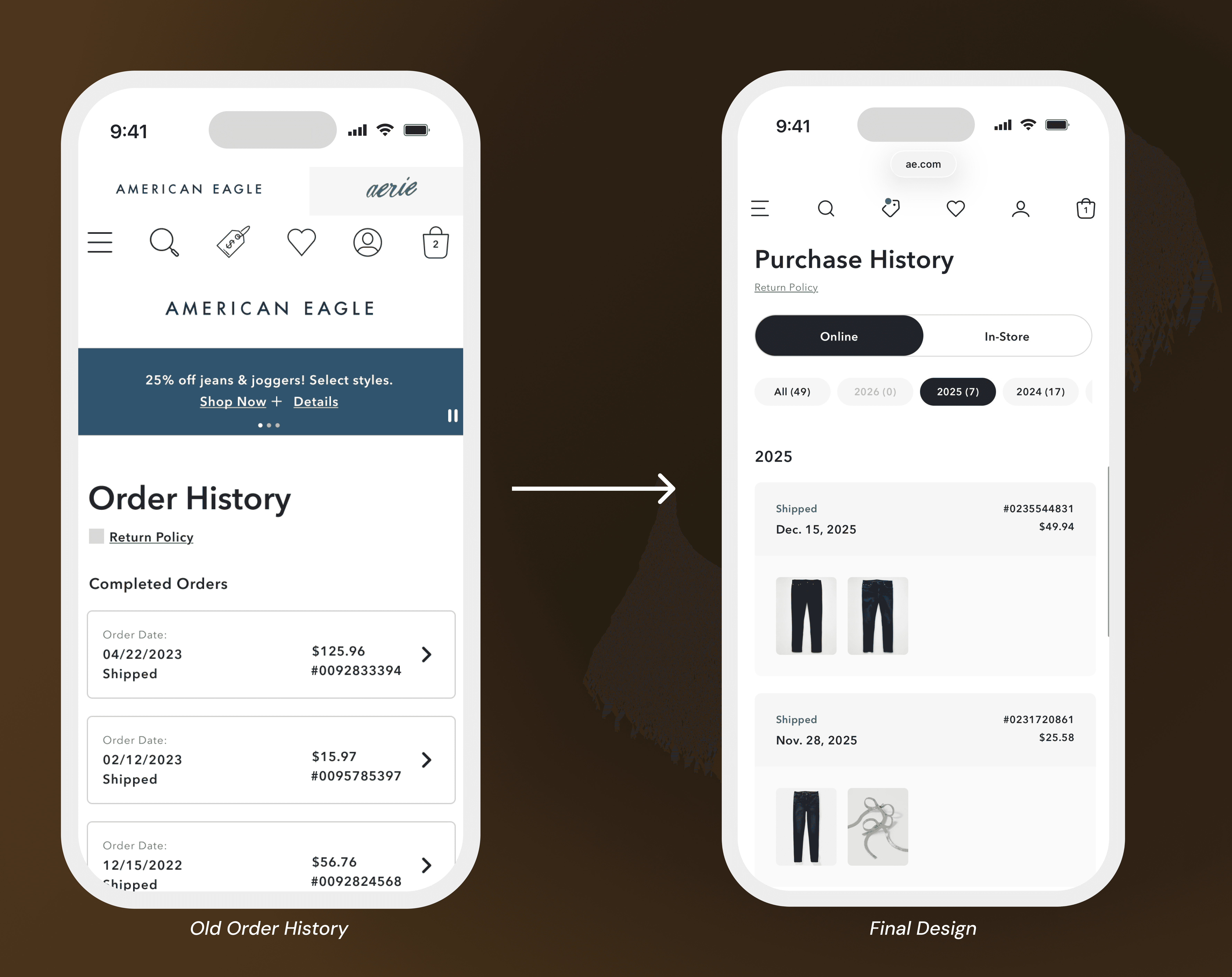
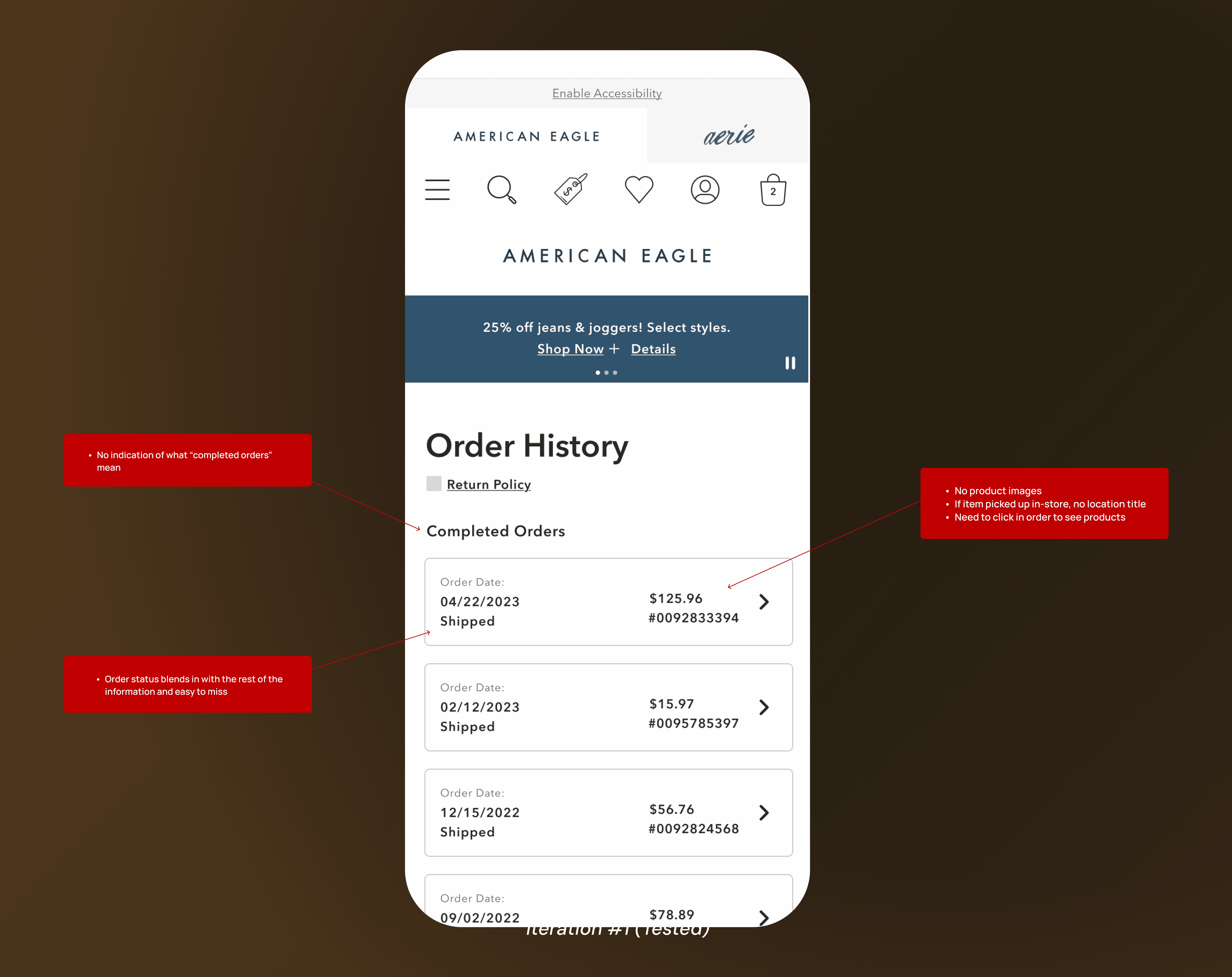
The current experience displayed orders in a spreadsheet-style list, hid product images behind clicks, and made customers work hard to find what they were looking for. Layering store purchases on top of that would have made it worse.

Business context
Order history is one of the highest-traffic account pages. It connects directly to returns, customer care volume, and loyalty retention. A redesign required clear business justification, so we introduced an optional re-order flow for high-repeat categories to add a measurable revenue angle alongside the experience improvements.

UX partnered with product and engineering to reframe the initiative from a feature add into a foundational redesign. One that improved findability, reduced customer effort, and set the groundwork for supporting both online and in-store purchases without repeated rework later.

My contributions

Led end-to-end UX design for order history
Conducted competitive analysis and listening lab observation
Introduced re-order flow to strengthen business case
Collaborated across PTC, stores, customer care, product, and engineering

Strategic context

Redesign intentionally architected to support future store purchase history
Required early alignment with stores and customer care teams
Business case supported by introducing re-order capability for repeat-purchase categories
Problem & Solution

From spreadsheet to something you can actually scan

The existing experience treated order history like a database export. Every piece of data was present but nothing was prioritized. The redesign flipped that: lead with what customers use to recognize an order, not what's easiest to store.

The problem

A data-dense list that customers couldn't navigate

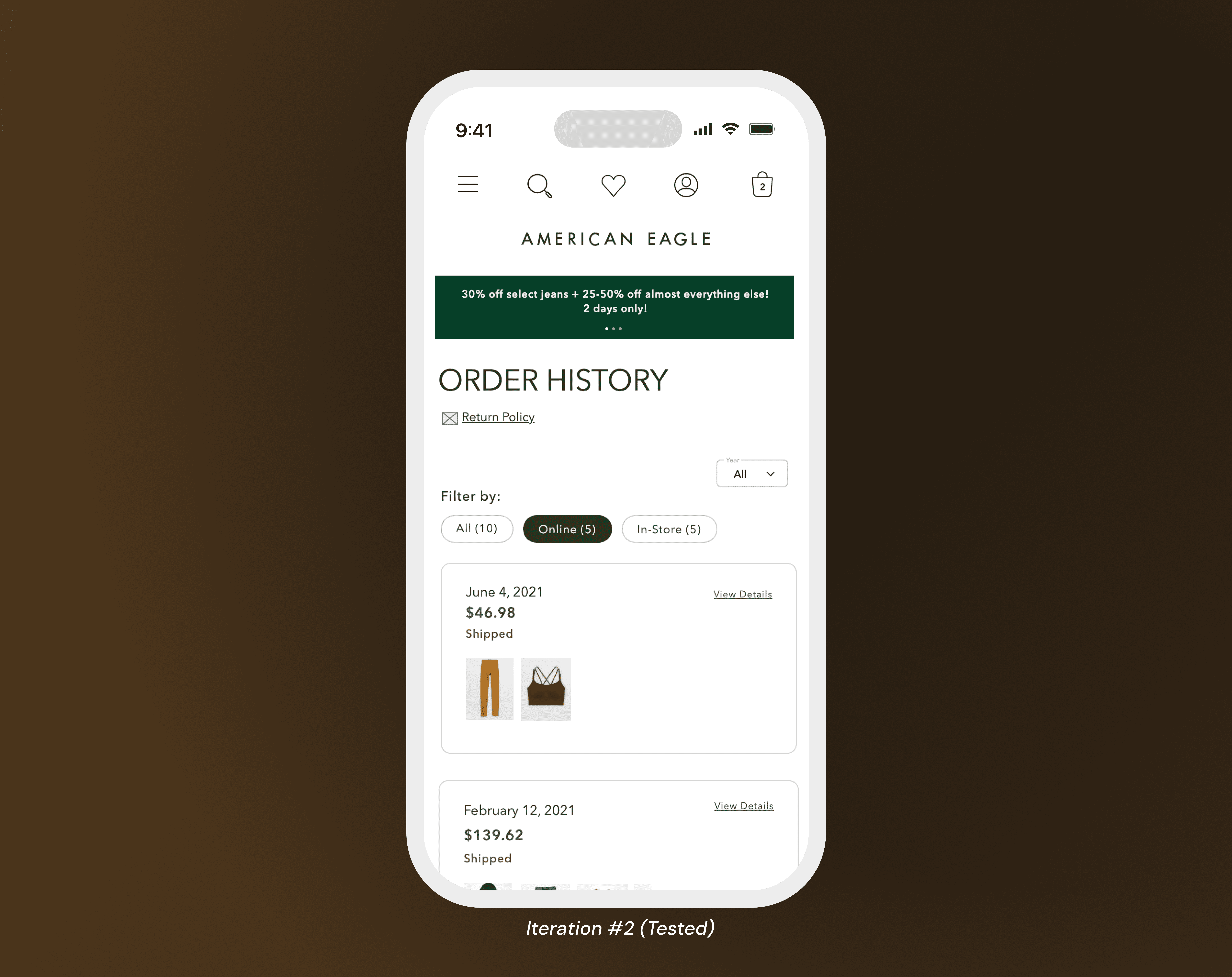
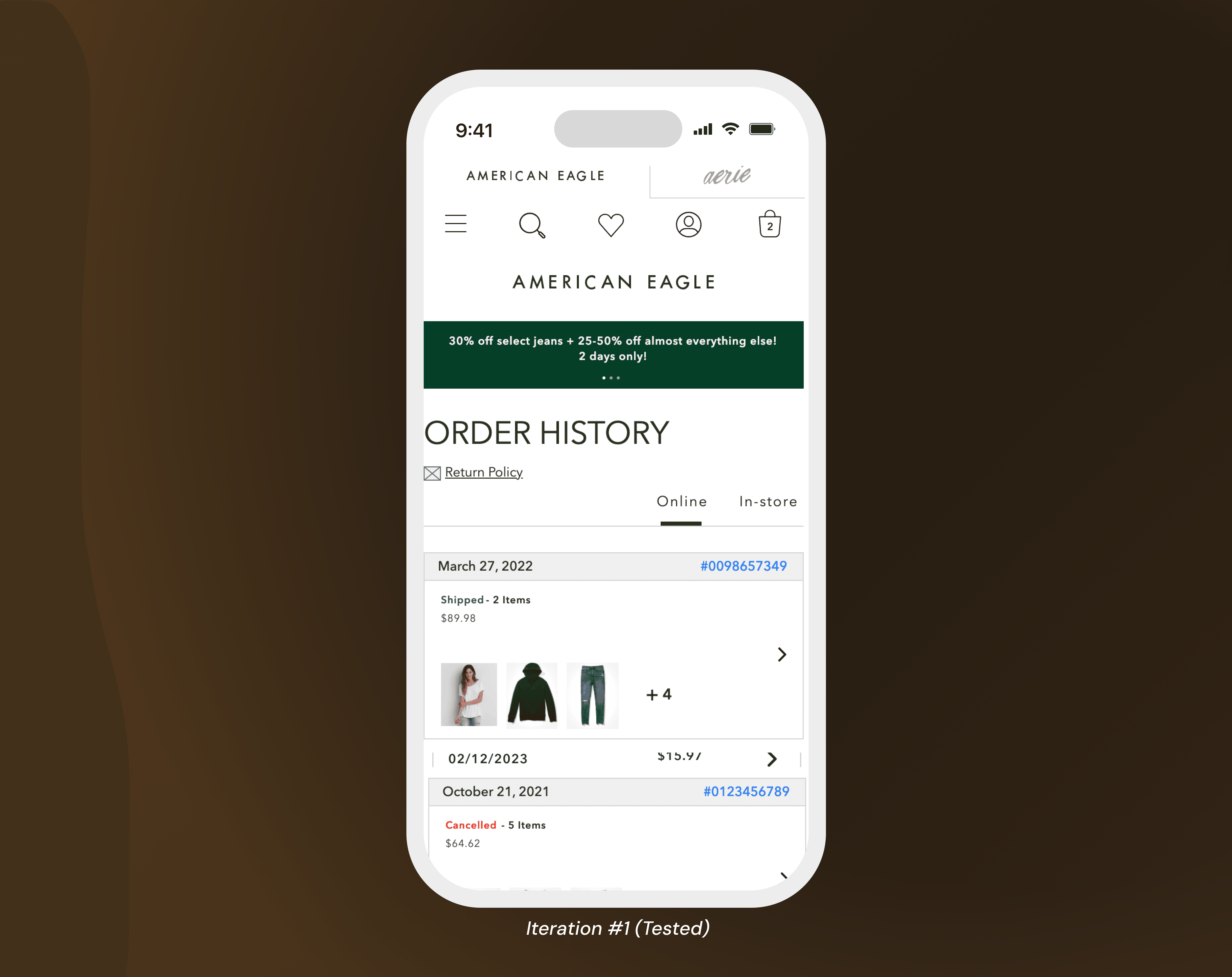
Orders displayed in spreadsheet rows. Product images hidden behind clicks. No visual anchors. Customers had to remember dates or prices to find what they needed. That is recall-based design in a recognition-based context.

The solution

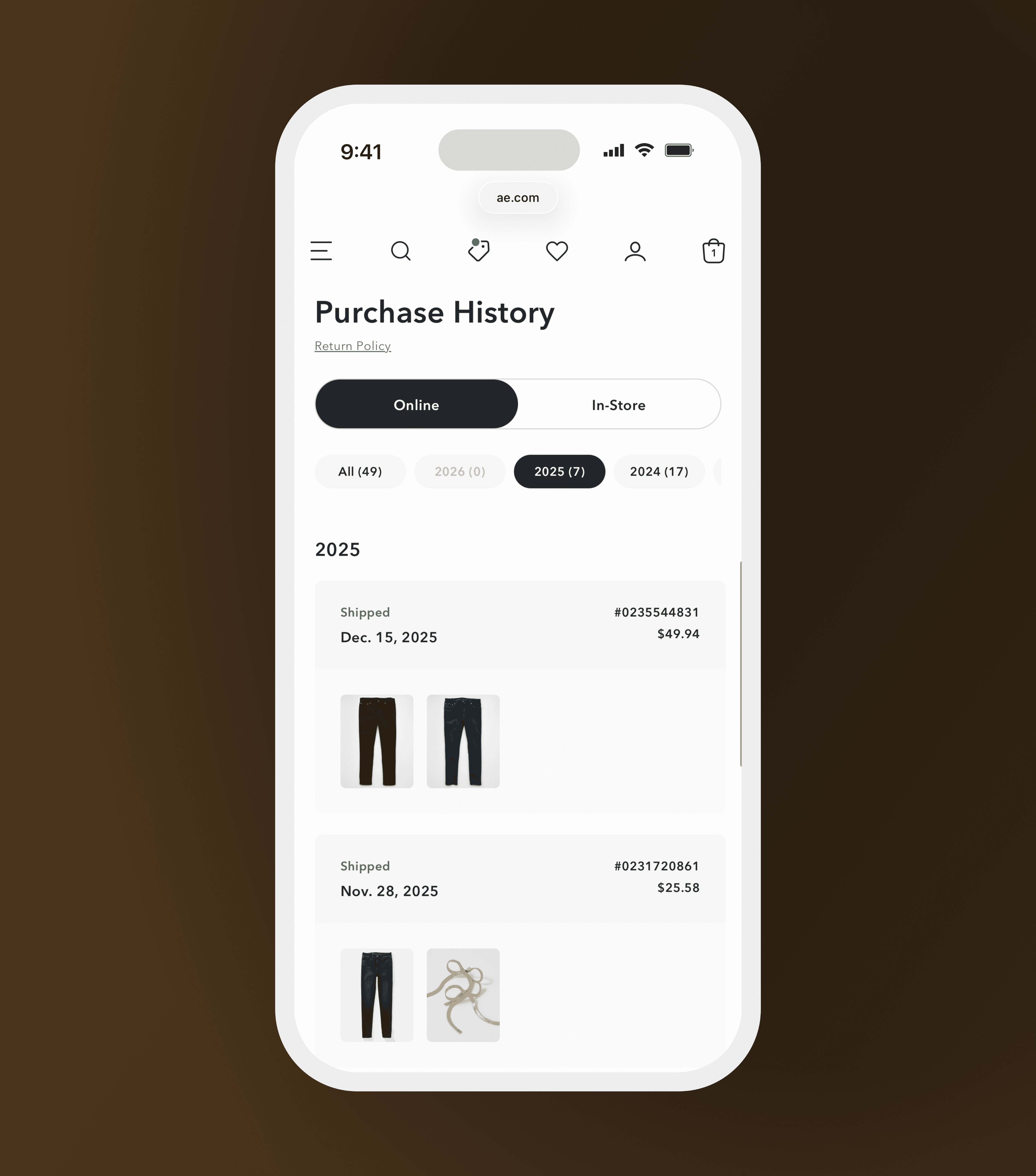
Card-based layout leading with product images and key details

Front-facing product images for up to five items per order. Order number, status, date, and total surfaced immediately. Condensed card layout replacing spreadsheet rows. The same framework built to support online and in-store purchases without redesigning later.

Key tradeoffs I made
Choose This
Five images maximum per order
Space constraints meant not every item could be shown. Five covered the majority of orders while keeping the layout consistent and scannable across the catalog.
Choose This
Signed-in loyalty customers only
Limiting to authenticated members narrowed scope to roughly 15 million active accounts, a meaningful audience that also provided a clearer business justification.
Choose This
Added re-order flow to build the business case
The redesign was primarily an experience improvement without a direct conversion story. Introducing re-order for repeat-purchase categories added a measurable revenue angle that helped fund the work. Although it was de-scoped later in the timeline.
Final design

Research

Customers recognize orders. They don't remember them.

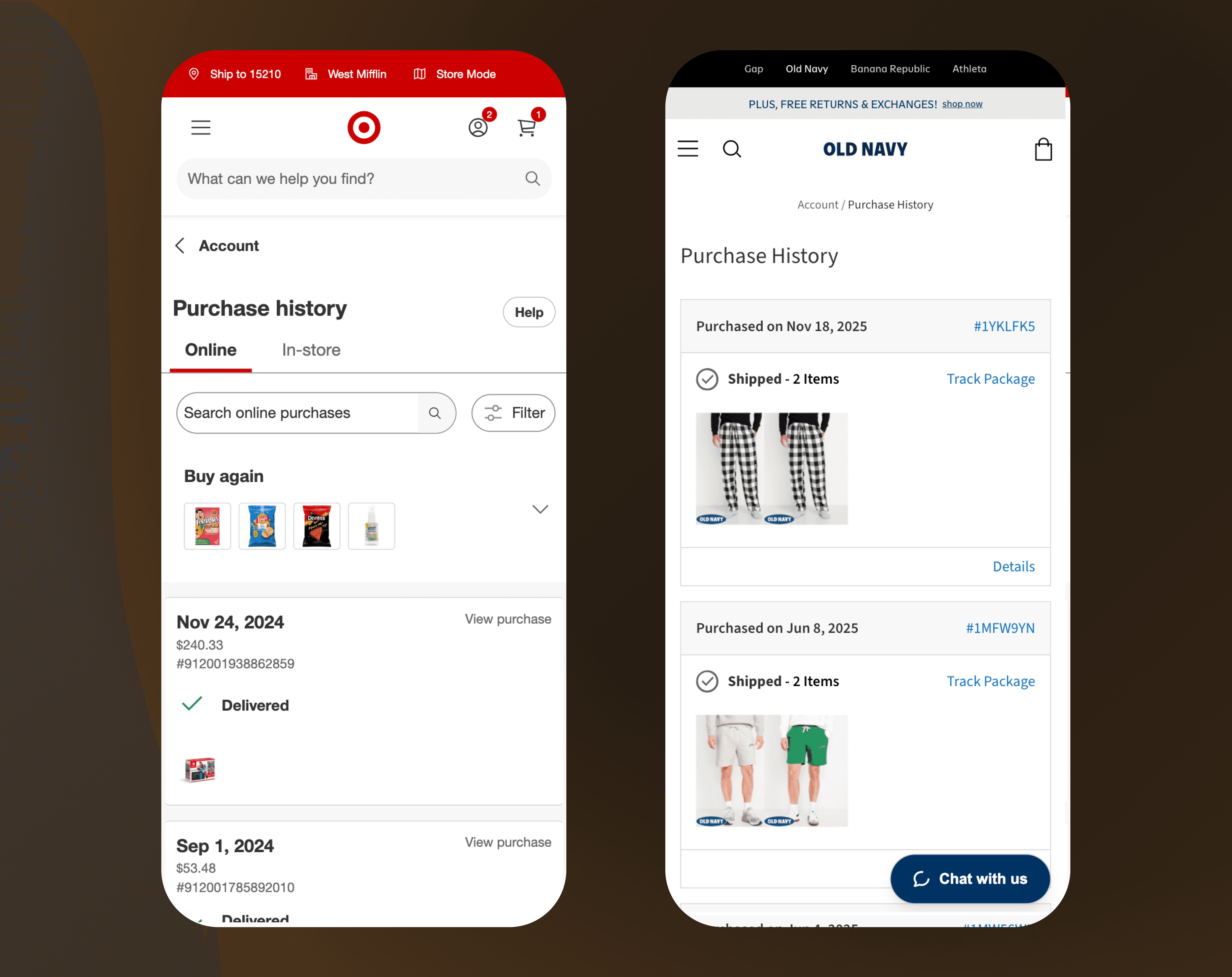
I reviewed order history experiences across major retailers and observed customers navigating competitor pages in a listening lab setting, watching for where friction and hesitation showed up.

The research focused on what information customers look for first, how they identify an order they care about, and what makes the difference between a quick find and a frustrating search.

Visual first

How customers scan

Customers rely on product images to identify orders, not order numbers or dates

3 signals

What they look for

Order total, date, and product image are the three pieces of information customers look for immediately

Recognition

Not recall

Customers can recognize an order much faster than they can recall the details needed to search for it

"Product images paired with order totals and dates dramatically reduce search time and cognitive load."

The design direction became clear: lead with recognition. Surface what customers use to identify an order visually, without requiring additional clicks to get there.
Outcomes

A better experience and a foundation worth building on.

The redesign improved findability, reduced effort, and established the architectural groundwork for store purchase history. That groundwork was used exactly as intended when the store initiative launched about a year later.

Higher
Customer Satisfaction

Among users navigating order history post-launch

Reduced
Customer Care Effort

Easier self-service reduced order-related contacts for customers and agents

Scalable
Foundation Built

Architecture designed from day one to support online and in-store purchases

Beyond the metrics

The architectural decision to design the order history framework for store purchases from the start paid off a year later when the store purchase history initiative launched. The foundation was already there. That kind of foresight shortens timelines and reduces rework in ways that don't show up in a single project's metrics.

What I'd do differently

Pushed harder for a stronger satisfaction measurement framework at launch, so the post-launch story had more specific data to point to.

Made the scalability rationale more explicit in stakeholder communications earlier. It was the strongest part of the case and undersold.

What I'm proud of

Reframing a feature add into a foundational redesign. Convincing stakeholders the bigger scope was worth it required a clear argument, and the store launch a year later validated it.

The listening lab findings shaped the entire design direction. Leading with recognition over recall was the right call.

Building strong cross-functional relationships

Next project

Tap to Apply Instant Store Credit

View case study →Back to all work
Shana Shields
SENIOR PRODUCT DESIGNER (UX & STRATEGY)
© 2026 S. Shields · All rights reserved
Shana Shields
SENIOR PRODUCT DESIGNER (UX & STRATEGY)
© 2026 S. Shields · All rights reserved